Why Jewelry Wax Printing Demands "High Precision"?
Imagine this: You've designed an engagement ring with lace-like openwork, or a pendant featuring an elaborate family crest. But when the design moves to production, the resulting wax mold has blurry edges and lost details. The final cast metal piece loses its soul.
This isn't the designer's fault, nor the foundry's error. The problem often lies at the source—the 3D printer that transforms the digital design into a physical wax mold lacks sufficient resolution.
Today, we break down what "high precision" truly means for jewelry wax printing and why it directly impacts your profitability and brand reputation.
The Challenge: Complex and Diverse Jewelry Designs
First, let's examine why jewelry designs are so demanding to print:
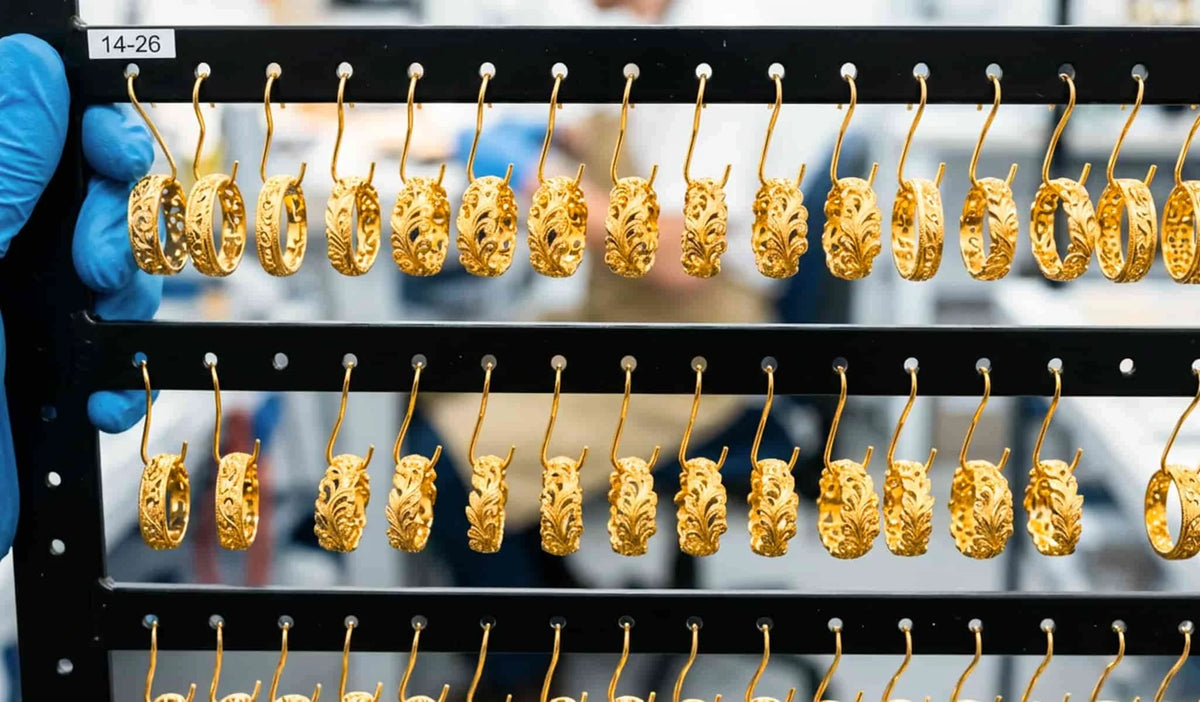
- Extreme Detail: Micro-prongs can be mere fractions of a millimeter thick; vintage engraving patterns are finer than a strand of hair; text inscriptions must be legible. These require a printer with exceptional recognition and reproduction capability.
- Complex Structures: Multi-layered openwork, overhanging chains, delicate ear wires. The printer must deposit wax with surgical precision. Any layer misalignment can lead to fragile structures or deformation.
- Smooth Curves: The inner arc of a ring shank, the rounded bezel for a gemstone, the soft contours of a portrait. The printer must use extremely thin "slices" to simulate smooth transitions, or else unsightly "stair-stepping" occurs.
The conclusion is simple: If your products contain any of these elements, a standard, low-precision printer becomes your biggest production bottleneck. It doesn't "create"; it mercilessly "filters out" the most exquisite details of your design.

The Benefits: High-Precision Wax Molds Ensure Quality and Save Costs
The advantages of a high-resolution printer extend far beyond just "looking good." They translate directly into tangible time and money savings:
- Design Freedom, No Compromises: Designers can unleash their creativity without simplifying designs for "printability." Your product line can feature truly unique, complex styles, building a core competitive advantage.
-
Smooth Surfaces, Less Labor: This is the most direct cost-saving area. A high-precision wax mold emerges with a naturally smooth and fine surface.
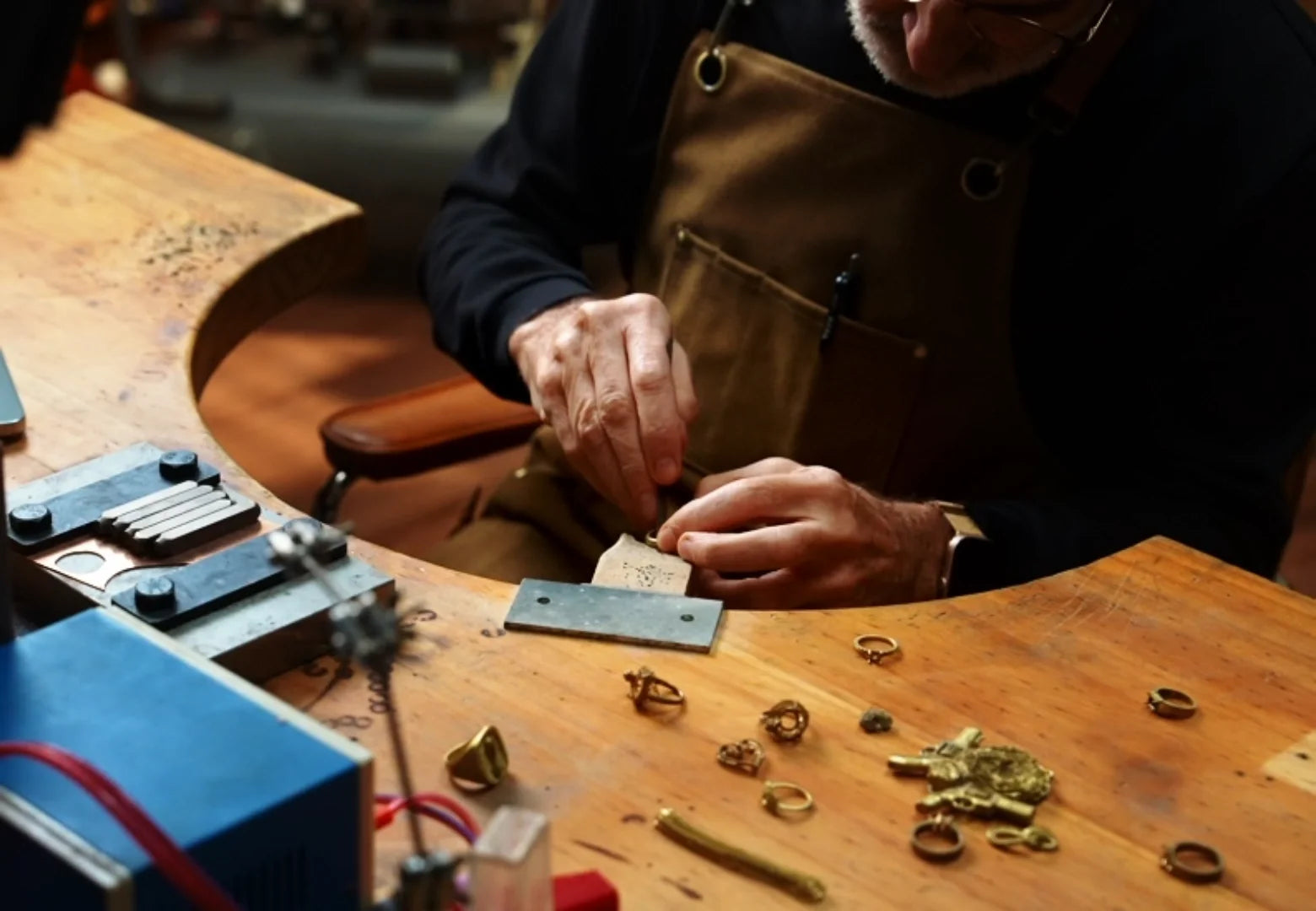
- The Contrast: A low-precision wax mold requires a master craftsman to spend tens of minutes or even hours with blades and fine sandpaper, polishing away stair-stepping and repairing blurry details.
- The High-Precision Mold: May only need simple support removal and is ready for casting in minutes. You save on expensive skilled labor costs.
- Higher Casting Success Rate, Less Waste: Wax molds with sharp details and accurate dimensions ensure smooth wax flow during casting and easier de-molding. This drastically reduces waste from wax breakage, metal short-fills, and misaligned settings. Every gram of gold, silver, or platinum is utilized fully.
- Enhanced Brand Value & Premium: Jewelry delivered to customers features perfect details, sharp edges, and clear textures. This impeccable quality is the best foundation for telling your brand story and commanding a higher price.
The Metrics: How to Decipher "High Precision" Specifications
Here's the crucial part. As a buyer, how do you judge if a printer falls into the "high precision" category from its spec sheet? Focus on two core metrics:
1. XY-Axis Accuracy: Determines Detail "Sharpness"
- What it is: Think of it as how fine the printer's "pen tip" is on the horizontal plane. Measured in DPI (Dots Per Inch).
-
How to Judge:
- Standard / Entry-Level: 300 - 600 DPI. Suitable for simple bands and plain pendants.
- Professional / High-Precision: 800 DPI and above. Top-tier devices can reach 1200 DPI or even 2900 DPI (e.g., Flashforge WaxJet series). This is essential for handling complex patterns and micro-setting.
- An Analogy: It's like using a thick marker versus a technical pen to trace an intricate drawing. High DPI is that technical pen, accurately reproducing every minute stroke.
2. Layer Thickness: Determines Surface "Smoothness"
- What it is: The thickness of each layer of wax the printer deposits. Measured in micrometers (μm or microns).
-
How to Judge:
- Standard: 50 - 100 μm. Layers are like a thick magazine, creating noticeable stair-stepping on curves.
- High-Precision: 10 - 30 μm. Layers are as thin as a sheet of office paper, making curves appear almost perfectly smooth.
- The Key Point: Thinner layers usually mean longer print times, but this is a worthwhile trade-off for quality-focused jewelry production.
Remember: You must consider both together! Only a printer with both high XY resolution and thin layer thickness can act like a master sculptor, achieving extreme precision in both the horizontal and vertical dimensions.

Your Pre-Purchase Checklist for a High Resolution Printer
When evaluating printers, go beyond the sales pitch. Be sure to:
- Request Test Samples: Ask for a comprehensive test print containing fine text, dense patterns, openwork, and smooth curves. Inspect it yourself with a loupe.
- Ask for Real-World Data: "Can this machine successfully print a 0.3mm prong?" "How fine of a texture can it reproduce?"
- Calculate the Total Cost of Ownership: Factor in the machine price, wax material cost, and post-processing labor time. A more expensive high resolution printer often leads to a lower cost per piece and a faster return on investment (ROI) due to significant savings in subsequent labor.
Conclusion
In the jewelry industry, where "details are everything," investing in a high-precision 3D wax printer is more than a simple equipment upgrade—it's an evolution in production philosophy.
It liberates you from the constraints of "production feasibility" into the realm of "design freedom." It redirects expensive labor from repetitive polishing to more creative tasks. It lets the final product speak for itself, demonstrating superior quality.
High precision doesn't just print wax molds; it prints your brand's future.
Ready to see a high resolution printer in action? Explore how precision drives production in our case study: Why Gemmex Chose the Flashforge WaxJet Series as Their Core Partner for Precision Jewelry Production
Key Takeaways:
- A high-resolution printer is essential for complex jewelry designs
- High precision saves significant post-processing labor costs
- Look for both high DPI (800+) and thin layer thickness (10-30μm)
- Always request physical test samples before purchasing
- Consider total cost of ownership, not just initial price
Looking for a reliable high-resolution wax printer?
Discover how the Flashforge WaxJet Series can transform your jewelry production process.