Jewelry Polishing Process Explained: Barrel Polishing and Mechanical Polishing
What Is Barrel Polishing?
Barrel polishing, also known as tumbling, is a mechanical finishing process that improves metal surface quality through continuous rotation, friction, and impact between jewelry pieces, polishing media, and finishing compounds inside a rotating barrel.
Unlike manual polishing, barrel polishing is designed for batch processing. Hundreds or even thousands of small jewelry components can be processed simultaneously, making it one of the most commonly used surface treatment methods for gold jewelry, K gold jewelry, silver jewelry, and other mass-produced metal accessories.
During the process, jewelry pieces continuously tumble inside the barrel while stainless steel media repeatedly contacts the metal surface. Through constant compression and friction, small burrs are reduced, machining marks are softened, and the overall surface becomes smoother and more uniform.
Because barrel polishing mainly relies on repeated mechanical contact rather than aggressive cutting, it removes only a small amount of material. Instead, it gradually improves surface quality through long-duration, multi-directional processing.

Main Components of a Jewelry Barrel Polishing Machine
A professional barrel polishing machine mainly consists of two major parts: the drive system and the polishing barrel.
Drive System
The drive system includes the motor, transmission shaft, speed control system, and operation controller. It provides stable rotation power and controls important parameters such as rotation speed, processing time, and rotation direction.
Modern jewelry tumbling machines often support timer control, forward and reverse rotation, and adjustable speed settings. These functions allow manufacturers to optimize polishing parameters according to different materials, jewelry structures, and finishing requirements.
Polishing Barrel
The polishing barrel is the working area where jewelry, polishing media, water, and finishing compounds are placed together.
Many professional jewelry manufacturers use rubber-lined or polyurethane (PU) barrels because these materials reduce noise, minimize equipment wear, and prevent excessive impact between jewelry pieces.
Inside the barrel, stainless steel polishing media work together with finishing compounds to create the desired surface improvement effect.
Why Does Polishing Media Shape Affect the Result?
The polishing media inside a barrel are not simply metal balls. Their shape, size, and surface characteristics directly influence the final polishing performance.
Different shapes are designed for different processing purposes. Round steel balls are commonly used for general surface smoothing and uniform finishing because they provide consistent contact over larger areas.
Cylindrical media are more effective for reaching narrow areas such as ring interiors, holes, and small recessed structures. Their elongated shape allows better contact with complex geometries.
Barrel-shaped and flying-saucer-shaped media are often used for curved surfaces, edges, and corners because they help reduce polishing blind spots.
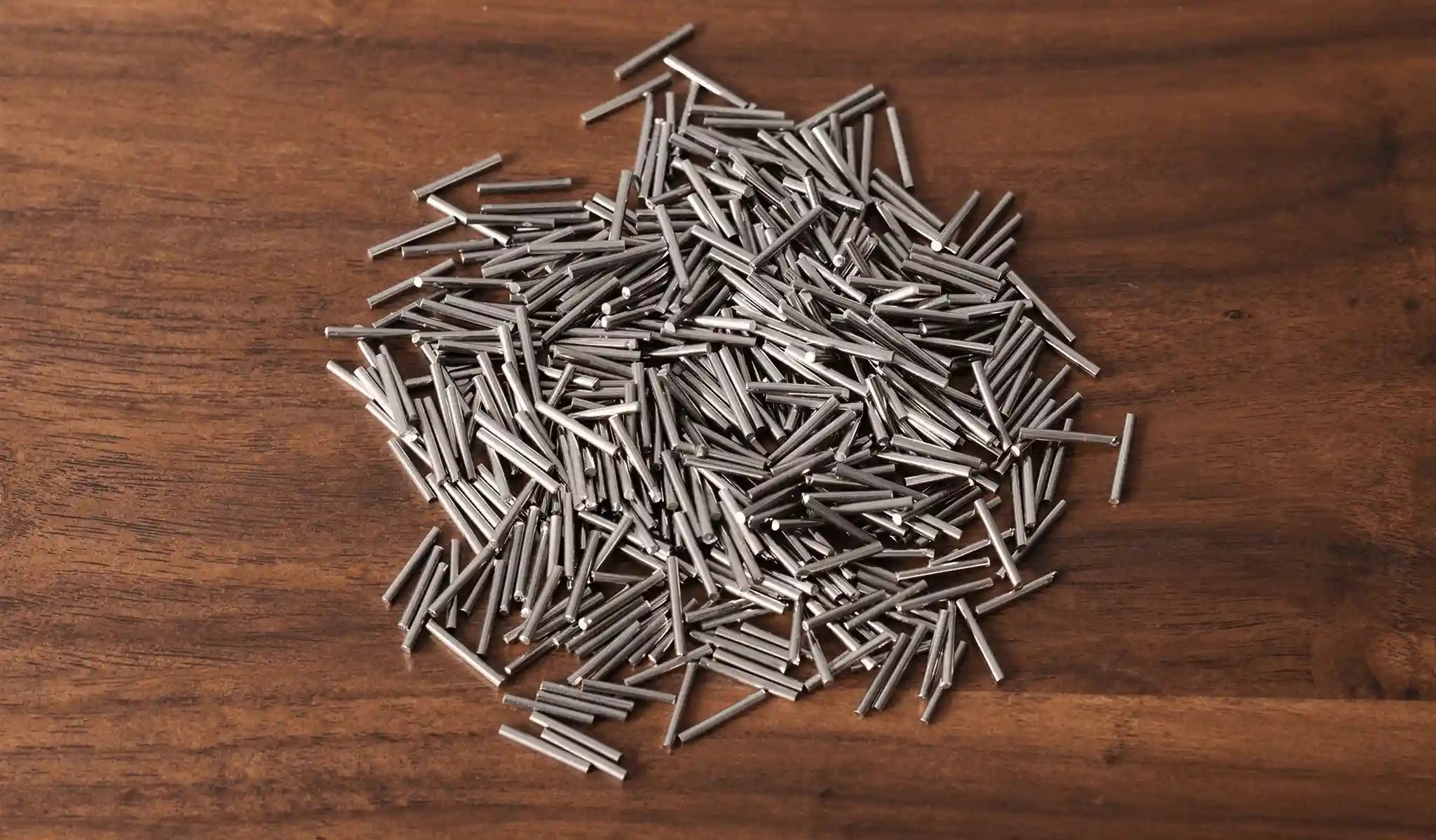
Needle-shaped or pointed media can penetrate detailed structures such as engraved patterns, filigree designs, and chain connections where traditional polishing tools may have difficulty reaching.
In actual jewelry manufacturing, factories usually combine different sizes and shapes of polishing media rather than relying on a single type. This combination helps achieve more balanced and consistent surface finishing across different areas of the jewelry.
Why Is Finishing Compound Important in Barrel Polishing?
Many people assume that polishing media alone determine the final result, but the finishing compound is equally important in barrel polishing.
Without a proper polishing compound, friction between steel media and jewelry increases significantly, which may cause unwanted scratches, excessive wear of polishing media, and unstable finishing results.
Professional jewelry finishing compounds provide several important functions. They lubricate the movement of polishing media, reduce friction, remove metal particles and oxidation residues, and help prevent corrosion of stainless steel media.
During continuous production, contaminants such as metal powder, oil residues, and oxidation particles gradually accumulate in the compound. Therefore, regular replacement and cleaning are necessary to maintain stable polishing performance and consistent surface quality.
Which Jewelry Products Are Suitable for Barrel Polishing?
The biggest advantage of barrel polishing is its ability to process large quantities of jewelry at the same time. For this reason, it is widely used in mass production environments where efficiency and consistency are critical.
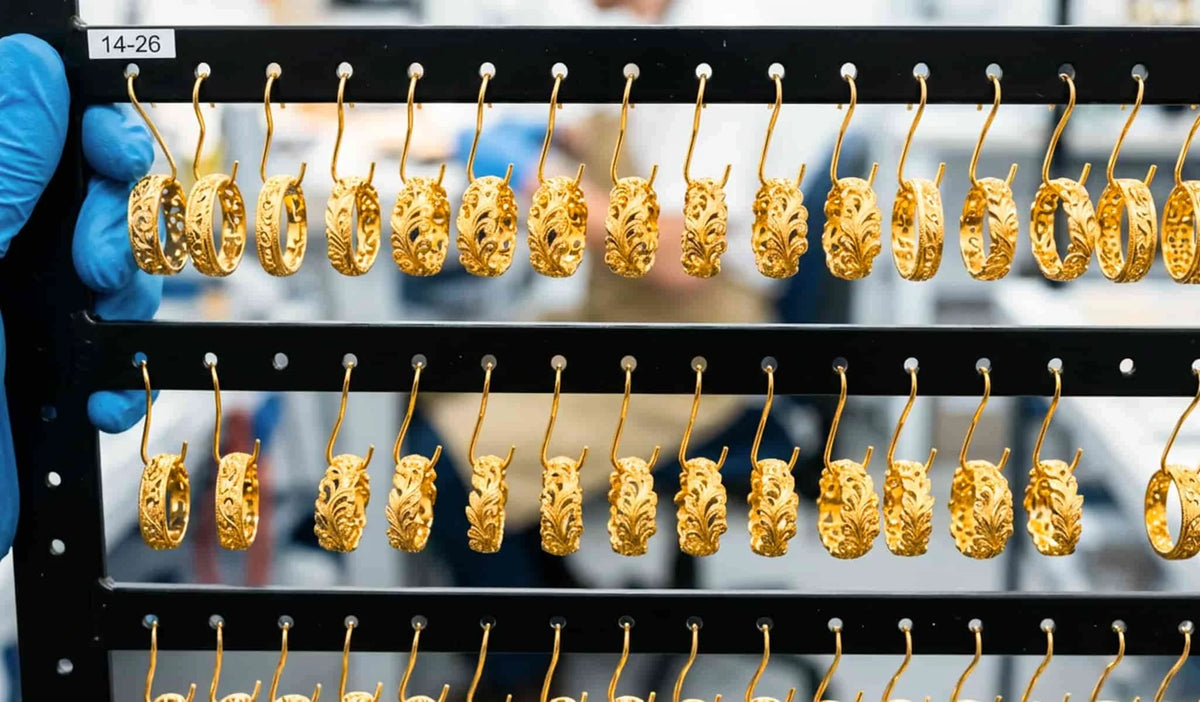
Gold rings, K gold earrings, silver pendants, chain components, and jewelry parts with relatively simple structures can all benefit from barrel polishing. The process can quickly improve surface smoothness while reducing manual polishing workload and production costs.
However, barrel polishing is not suitable for every type of jewelry. Products with delicate hollow structures, complex filigree patterns, fragile stone settings, or finished gemstone assemblies may require alternative finishing methods.
For these applications, magnetic polishing or manual mechanical polishing is often preferred because these methods provide better control over complex details and reduce the risk of damage caused by physical impact.
What Is Mechanical Polishing?
While barrel polishing can significantly improve surface smoothness, it is generally considered a pre-polishing process. Achieving a true mirror finish usually requires mechanical polishing.
Mechanical polishing is a precision surface-finishing process that uses high-speed rotating buffing wheels together with polishing compounds to refine metal surfaces.
During the process, microscopic surface peaks are gradually removed, fine scratches are reduced, and the metal surface becomes increasingly smooth. As the surface becomes more uniform, it reflects light more evenly, creating the bright mirror-like appearance commonly seen on high-quality jewelry.
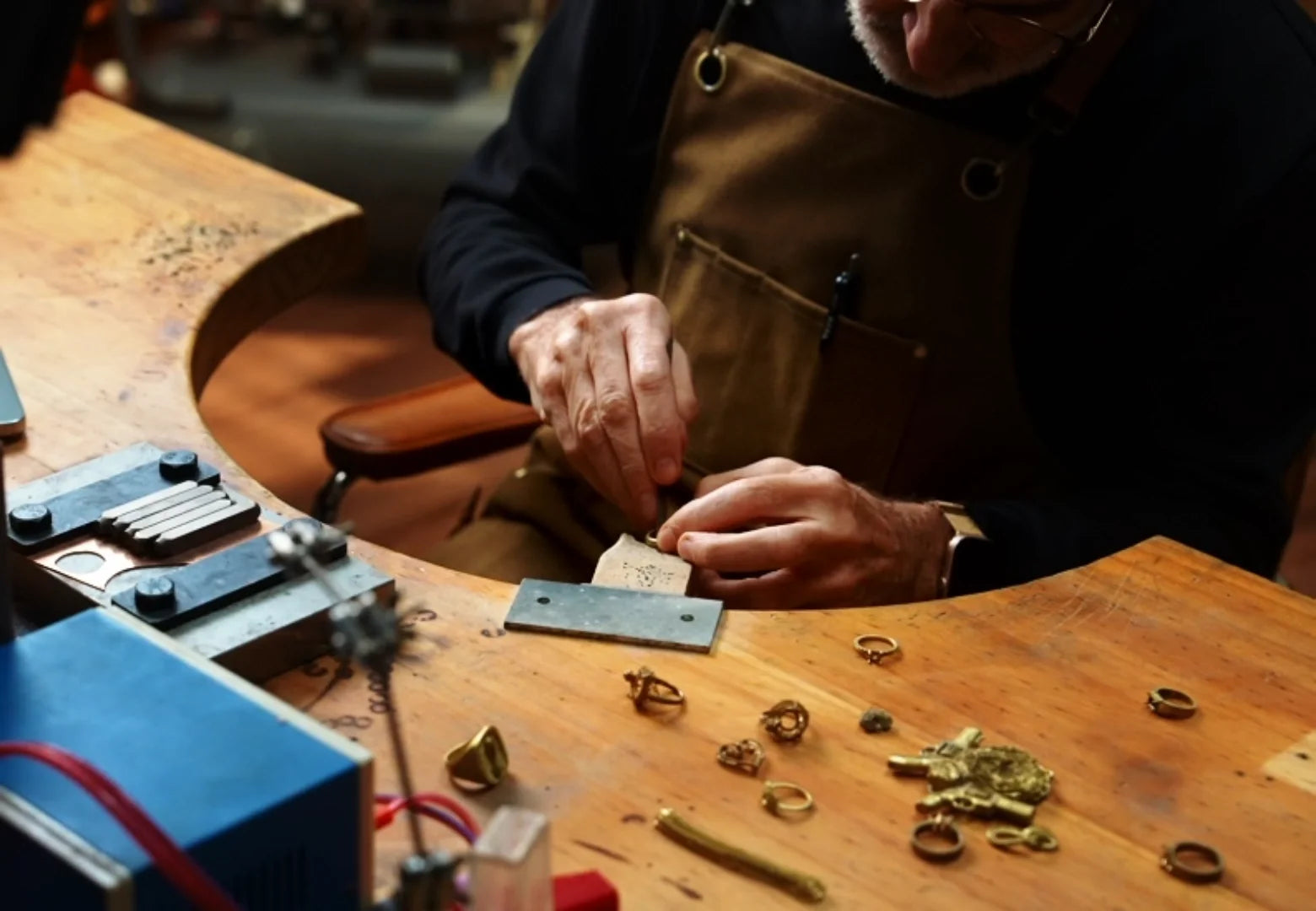
Compared with barrel polishing, mechanical polishing provides much greater control over specific areas. Operators can adjust pressure, polishing direction, wheel type, and compound selection according to different jewelry designs and materials.
For premium gold jewelry, platinum jewelry, K gold products, and high-end silver jewelry, mechanical polishing remains one of the most important processes for achieving final surface brilliance.
How Does Mechanical Polishing Create a Mirror Finish?
Mechanical polishing is not simply a process of making metal brighter. It involves a combination of micro-cutting, surface leveling, and controlled material flow.
When a polishing wheel rotates at high speed, the jewelry surface is pressed against the rotating wheel with controlled pressure. The abrasive particles contained in the polishing compound remove microscopic irregularities from the metal surface.
At the same time, friction generates localized heat, causing slight plastic deformation of the surface layer. Small raised areas are gradually flattened, while tiny surface imperfections are reduced through repeated polishing actions.
The polishing process also continuously removes the thin oxidation layer that naturally forms on metal surfaces, allowing the underlying bright metal layer to reflect light more effectively.
Through multiple polishing stages, from coarse polishing to fine polishing, jewelry manufacturers can gradually transform a rough cast surface into a smooth, reflective mirror finish.
Types of Jewelry Polishing Machines
Professional jewelry factories generally use different types of mechanical polishing machines depending on production requirements.
Fixed-Speed Polishing Machines
Fixed-speed polishing machines operate at a constant rotation speed and are widely used for general jewelry polishing applications.
Because of their simple structure and reliable performance, they are commonly used for gold jewelry, K gold products, and silver jewelry production.
These machines are cost-effective and suitable for standard polishing processes where consistent parameters are required.
Variable-Speed Polishing Machines
Variable-speed polishing machines provide greater flexibility by allowing operators to adjust rotation speed according to different materials and polishing stages.
Soft metals such as gold may require lower speeds to avoid excessive material removal, while harder materials such as platinum and stainless steel often require higher speeds and stronger cutting performance.
For modern jewelry manufacturers, adjustable-speed machines are increasingly preferred because they allow more precise process control and easier standardization of production quality.
Why Are Different Buffing Wheels Used for Different Jewelry Processes?
Choosing the correct polishing wheel is essential for achieving the desired surface finish. Different buffing wheels have different levels of cutting ability, flexibility, and polishing performance.
Yellow Cotton Buffing Wheel
Yellow cotton buffing wheels are commonly used for coarse polishing and pre-polishing stages.
Because of their stronger cutting ability, they are effective for removing minor surface marks, scratches, and uneven areas after casting or initial finishing.
White Cotton Buffing Wheel
White cotton buffing wheels have a finer structure and are mainly used for final polishing.
They help refine the surface texture and improve brightness, making them one of the most commonly used wheels for achieving a smooth and polished jewelry surface.
Felt Polishing Wheel
Felt wheels provide a firm yet slightly flexible polishing surface. They are often used for flat areas and final bright polishing because they can distribute polishing pressure more evenly.
Inside Ring Buff and Brush Wheels
Specialized tools are required for difficult-to-reach areas.
Inside ring buffs are designed for polishing the inner surfaces of rings, bracelets, and other circular openings. Bristle brush wheels are suitable for detailed areas such as engraved patterns, stone settings, grooves, and decorative structures.
In addition, jewelry manufacturers may use specialty polishing wheels made from materials such as silk, leather, wood, or paper depending on the specific finishing requirements.
Why Does the Polishing Compound Determine Final Surface Quality?
Although polishing wheels provide the mechanical movement, the polishing compound is the material that actually performs the micro-finishing work.
A polishing compound usually contains fine abrasive particles combined with oils, waxes, and lubricating materials. When applied to a rotating buffing wheel, these microscopic abrasives gradually remove surface imperfections while the lubricant helps control heat and friction.
Different polishing compounds are designed for different processing stages.
Coarse compounds provide stronger cutting performance and are used to remove sanding marks and casting imperfections. Medium compounds refine the surface further, while fine polishing compounds are used for final mirror polishing.
Professional jewelry manufacturers normally use a progressive polishing process, moving from aggressive compounds to finer compounds step by step. This approach provides better surface control and produces a more consistent final appearance.
How to Avoid Common Problems in Mechanical Polishing?
Mechanical polishing can create a highly reflective jewelry surface, but improper operation may also cause quality issues. Therefore, controlling polishing parameters and following standardized procedures are essential for achieving consistent results.
One common problem is excessive polishing pressure. Applying too much pressure between the jewelry piece and the buffing wheel may remove too much material, soften sharp edges, and affect the original design details.
Another issue is overheating during polishing. If the polishing wheel remains in contact with the same area for too long, friction heat can accumulate and cause surface discoloration or affect soldered areas.
In addition, different polishing compounds should be used separately for different stages. Mixing coarse and fine compounds on the same polishing wheel may introduce unwanted scratches and reduce surface quality.
Professional jewelry manufacturers usually assign dedicated buffing wheels for different polishing steps and regularly clean or replace polishing tools to prevent cross-contamination and maintain stable finishing performance.
Jewelry Surface Finishing Workflow: From Rough Surface to Mirror Finish
In modern jewelry manufacturing, surface finishing is usually completed through multiple stages rather than a single polishing process.
A typical jewelry finishing workflow includes casting cleanup, pre-polishing, fine polishing, and final bright polishing.
After casting, jewelry pieces first undergo cleaning and surface preparation to remove investment residues, oxidation, and manufacturing contaminants.
For batch-produced jewelry, barrel polishing or magnetic polishing is often used as an efficient pre-finishing step. These processes help remove minor imperfections and create a more uniform surface before manual or mechanical polishing.
After pre-polishing, mechanical polishing is used to refine the surface and achieve the required brightness. Different buffing wheels and polishing compounds are selected according to the jewelry material, design structure, and desired finish.
Finally, the jewelry may undergo additional treatments such as ultrasonic cleaning, electroplating, or protective finishing to achieve the final appearance required for commercial production.
Barrel Polishing vs Magnetic Polishing vs Mechanical Polishing
Although barrel polishing, magnetic polishing, and mechanical polishing are all used for jewelry surface finishing, each process has different advantages and application scenarios.
| Polishing Method | Main Principle | Main Advantages | Typical Applications |
|---|---|---|---|
| Barrel Polishing | Jewelry is polished through continuous tumbling with steel media and finishing compounds. | High production efficiency, suitable for batch processing, reduces manual labor. | Gold jewelry, K gold jewelry, silver parts, simple structures, mass production. |
| Magnetic Polishing | A rotating magnetic field drives stainless steel pins to polish complex surfaces. | Excellent for small details, narrow gaps, filigree structures, and complex geometries. | Fine jewelry, intricate designs, chain components, precision metal parts. |
| Mechanical Polishing | High-speed buffing wheels and polishing compounds create a smooth reflective surface. | Provides high gloss, mirror finish, and precise surface control. | Final polishing of premium jewelry, gold, platinum, silver, and luxury products. |
In many professional jewelry factories, these processes are not alternatives but complementary technologies. A typical production line may combine different finishing methods to achieve the best balance between efficiency, quality, and appearance.
The Role of Surface Finishing in Modern Jewelry Manufacturing
With the development of digital jewelry manufacturing, surface finishing has become increasingly important in achieving consistent production quality.
Modern jewelry production often combines CAD design, wax pattern production, casting, automated polishing equipment, and advanced finishing technologies to create a more efficient manufacturing workflow.
Especially for customized jewelry, small-batch production, and complex designs, stable surface finishing processes help manufacturers maintain product consistency while reducing manual labor requirements.
Technologies such as jewelry wax 3D printing also contribute to better finishing results by improving wax pattern accuracy and reducing inconsistencies during casting. More precise wax models provide better foundations for subsequent polishing, stone setting, and final finishing processes.
Conclusion: Choosing the Right Jewelry Polishing Method
There is no single polishing method suitable for every jewelry product. The best finishing solution depends on material type, product structure, production volume, and the desired surface effect.
Barrel polishing provides an efficient solution for large-scale batch production. Magnetic polishing offers excellent performance for complex structures and difficult-to-reach areas. Mechanical polishing remains essential for achieving premium mirror finishes and high-end jewelry appearance.
By combining different polishing technologies with standardized production processes, jewelry manufacturers can achieve higher efficiency, better consistency, and superior surface quality.
As jewelry manufacturing continues to move toward digitalization and automation, advanced surface finishing technologies will remain a key factor in improving production efficiency and creating higher-quality jewelry products.