Wax 3D Printer for a Small Jewelry Shop: How a Wuhan Goldsmith Cut Lead Times from Days to Overnight
On a street in Wuhan, a family-run gold shop takes a custom order in the morning, prints the wax pattern that night, and hands the finished piece to the customer the next afternoon. The machine behind that pace is the Flashforge WJ51C wax 3D printer — and it lives in a small room upstairs, next to its own air conditioner.

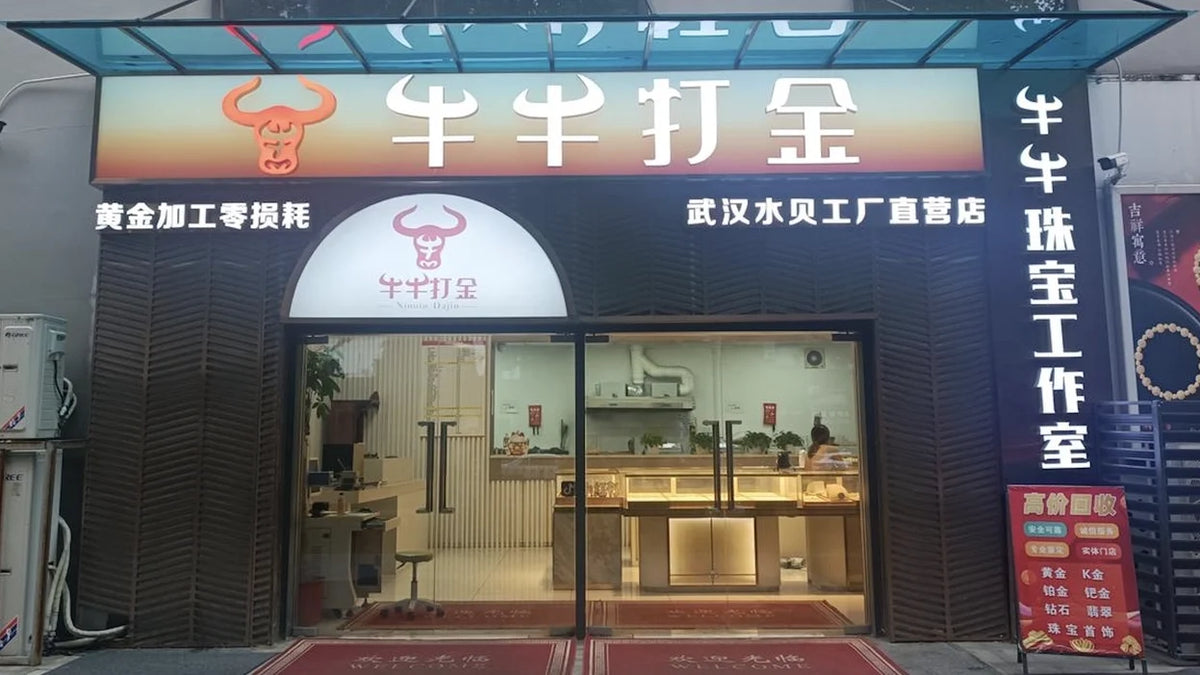
Niuniu Gold Shop serves its walk-in customers from this storefront in Wuhan.
The Story of a Family Gold Shop
Niuniu Gold Shop is a family business in Wuhan, China. The owner has worked with jewelry since 2014. In 2021, the shop opened its custom goldsmithing service — the kind of business where people walk in with old rings and chains, sit down at the counter, and describe something they want made. Five years on, that walk-in trade is the heart of the shop.

The shop's name — 牛牛打金 — greets customers at the door.
Two capabilities make it work. The shop designs every piece itself and prints its own wax models, so a custom order never waits on an outside factory. It also runs a CNC machine for the shapes hand tools struggle with. "Handmaking is common everywhere now," the owner says. "Having both is our advantage."
The owner of Niuniu Gold Shop during our interview in Wuhan.
Much of the work starts with gold the customer brings in: an old bracelet melted down and recast as a new pendant, a ring resized and restyled. Speed matters to these customers — which is exactly why the printer came in.
Ten Years of Sending Wax Work Out
The owner first saw a jewelry 3D printer around 2013. For the decade that followed, his relationship with the technology stayed the same: his designer finished the CAD file, sent it to a mold-making factory, and the factory printed the wax and sent the molds back for casting. The system worked. But every order spent three or four days sitting in someone else's queue.

Hand polishing remains part of the finishing work on every cast piece.
Buying a machine of his own was harder than it sounds. Space came first — a printer needs a room of its own and a dedicated air conditioner, and street-front floor space in a jewelry shop is precious. Timing was the second problem: for years, order volume simply did not justify the cost. And underneath both sat a quieter worry. This is expensive equipment. Would it really hold up through years of daily production?
Why This Printer, and Why Now?
What changed was the product itself. When Flashforge released a compact red-wax printer, the fit was immediate. "We learned about Flashforge through our mold-making factory," the owner says. "I had wanted a printer like this for a long time. When the small red-wax model came out, it matched our needs exactly."
He never shopped around, and he did not need to: every finishing workshop and upstream supplier he works with already runs Flashforge machines.

The Flashforge WJ51C, installed in its own room with a dedicated air conditioner.
Inside the Shop: Storefront Up Front, Workshop Upstairs
From the street, Niuniu looks like any other gold shop. Upstairs, it is a complete workshop: design, printing, wax-tree assembly, plaster casting, burnout, and CNC finishing. Between the approved design and the cast metal, an order never leaves the building.
That is the whole point. Because the shop controls every step itself, it can promise a delivery date instead of guessing one.
From Sketch to Gold in Two Days
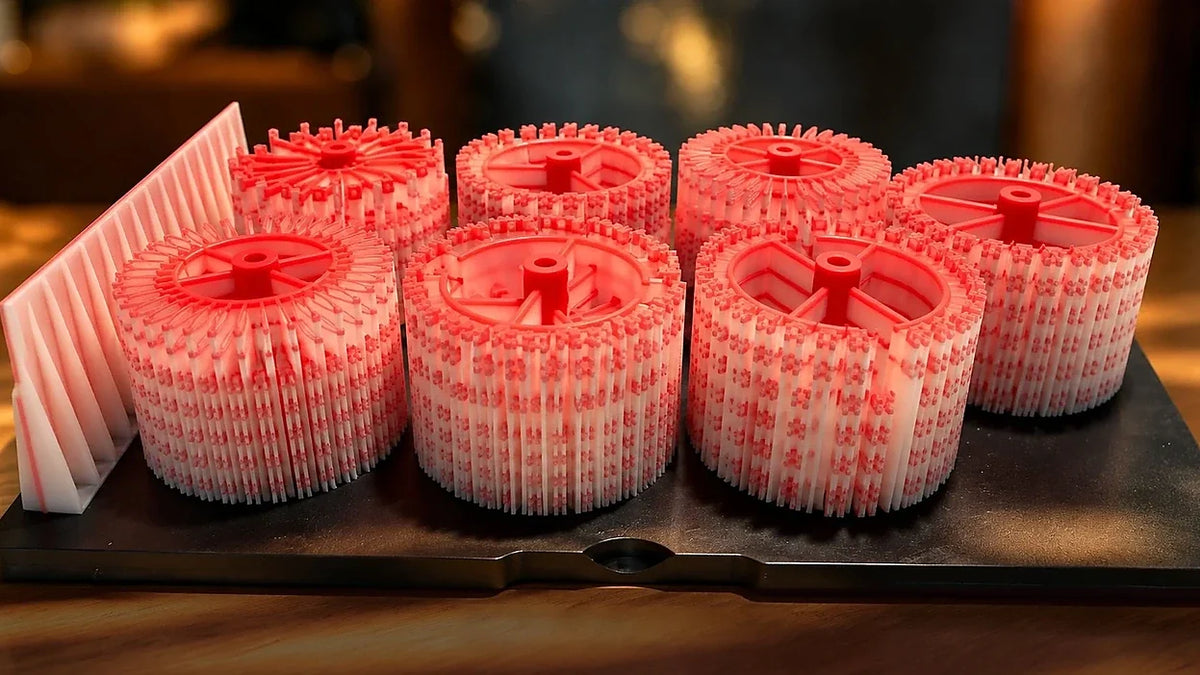
A typical day produces about a dozen custom pieces. Most start from the shop's own design library: the designer adjusts the weight and dimensions, sends the file to print in the evening, and the wax is ready by morning. For a piece up to 2 cm thick and roughly 4 × 15 cm across, the WJ51C finishes a build in a little over two hours. "If more orders come in, we can handle them," the owner says.

Casting flasks, ready for the overnight burnout and gold pour.
| Before: outsourced wax | Now: in-house WJ51C | |
|---|---|---|
| Wax pattern turnaround | 3–4 days | Overnight |
| Order to delivery | 8–10 days | 3–4 days |
| Production schedule | Set by the supplier's queue | Set by the shop |
| Design files | Shared with suppliers | Stay in the shop |
An order now runs like this: taken in the morning, sized and priced the same day, printed overnight, cast the next morning, ready by that afternoon. "We can promise delivery times now," the owner says. "That's what customers actually notice."
Is a Printed Pattern as Good as a Hand-Carved One?
Ask him to compare the two and he scores printed wax about 90 out of 100 against hand carving — ahead on precision, because handwork is never perfectly consistent. Cast pieces fit well. His score for the machine itself is higher still: 98 out of 100, with the fine wax detail and the speed earning most of it.
He is honest about what is not perfect yet. A few pieces still come out slightly rough — not the printer's fault, he says, but his own learning curve. Every model needs its own layout and orientation, and that judgment only comes with practice. Running the machine is the easy part: his designer trained on this type of printer years ago, and after a week of refamiliarization he now needs about half an hour per job. And when the shop has reported a problem, "they solved it for us every time."

After casting: soldering and hand-finishing turn the raw gold into a finished piece.
What Would He Tell Other Jewelry Shops?
He does not hesitate. "I highly recommend it. Any jewelry store doing private customization could own one — it is a huge improvement, for the customer's design and for speed."
His reasons come straight from running the shop. Design files never leave the building, so an original design stays original. And next-afternoon delivery is a promise a shop without its own printer simply cannot make.
As for where the trade is heading, he keeps it to two words: speed and precision. He is watching what Chinese goldsmiths call "AI gold-making" — AI drafts the model, a designer refines the details, the printer produces the wax, and CNC finishes the metal. "It turns impossible designs into possible ones."
One thing he has deliberately not done yet is advertise. "We are still running the machine in. We don't want surprises once we start promoting it." It is the same patience that kept him waiting a decade for the right printer — which suggests this shop's story is not finished.
The interview behind this story was filmed on site at the shop in Wuhan — watch the full visit on the Flashforge YouTube channel.
FAQ
Q1: How much space does a jewelry wax 3D printer need?
A1: More than a spare corner. In a real shop it gets a small room or partitioned area of its own, plus a dedicated air conditioner. Niuniu set up its space before the WJ51C arrived, because street-front stores rarely have floor area to spare.
Q2: How long does it take to print a jewelry wax pattern?
A2: At Niuniu, a little over two hours for pieces up to 2 cm thick and roughly 4 × 15 cm across. Builds with taller models or more pieces take longer.
Q3: Are printed wax patterns accurate enough for gold casting?
A3: Yes. The owner scores printed patterns about 90 out of 100 against hand carving on precision, and cast pieces fit well. The few rough surfaces early on came from layout inexperience, not from the printer.
Q4: Can a small shop run one without a full-time operator?
A4: Yes. Niuniu's designer handles printing alongside design work — about half an hour per job once familiar with the machine. Most orders reuse existing design files and only need weight and dimension changes.
Related Reading
- Customer Story: 60 Years of Craftsmanship Meets the WJ51C in Istanbul — the same printer in a heritage Turkish workshop
- Front Store + Back Workshop: A Smarter Workflow for Custom Jewelry
- Lost-Wax Casting: From Ancient Craft to Modern Jewelry Art
- What Is MultiJet Printing (MJP)? MJP vs MJF Explained
- WJ51C Desktop Wax 3D Printer — Specifications
- WaxJet 3D Printer Series Overview