3 Common Gold Plating Methods for Jewelry
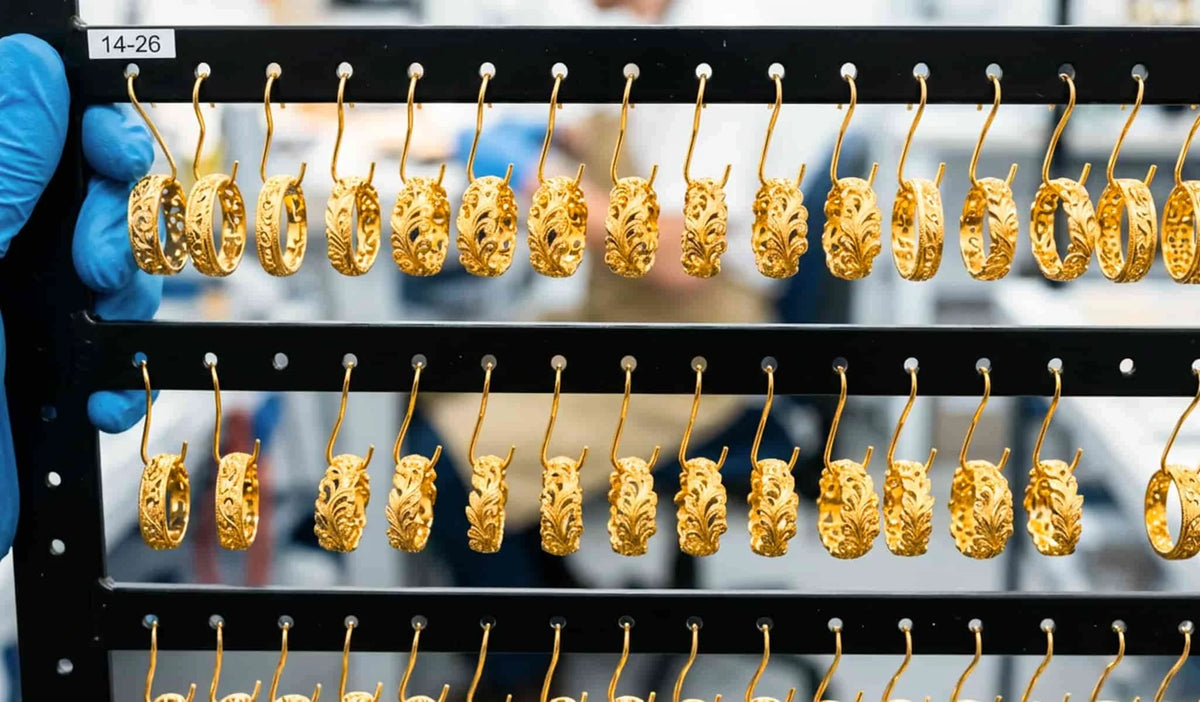
Gold plating is widely used in jewelry manufacturing to enhance appearance, durability, and surface quality. By applying a thin layer of gold over another metal, manufacturers can achieve a rich gold finish while improving resistance to tarnishing and corrosion.
Different gold plating systems offer different advantages in terms of purity, color, hardness, efficiency, and process requirements. Understanding these differences can help jewelry manufacturers choose the right plating method for a specific application.
Why Is Gold Plating Used in Jewelry?
Gold is highly resistant to corrosion and oxidation, making it an ideal surface finish for jewelry.
Gold plating gives jewelry a bright, attractive gold appearance while helping protect the underlying metal from environmental exposure. This is particularly useful for silver jewelry, where a gold layer can reduce direct contact between the silver surface and sulfur compounds that cause tarnishing.
By adjusting the plating system and bath chemistry, manufacturers can also achieve different shades, including traditional yellow gold, rose gold, and white-gold tones.
However, gold is generally considered a cathodic coating, meaning the protective effect depends heavily on achieving a continuous and defect-free surface. Proper plating quality and process control are therefore essential.
Among the commonly used gold electroplating systems, alkaline, neutral, and acidic gold plating are three important methods used in jewelry production.

1. Alkaline Gold Plating
Alkaline gold plating is known for producing high-purity, relatively soft gold deposits.
The plating system provides good coverage, making it suitable for jewelry with complex shapes and detailed surfaces. It can achieve relatively uniform deposits even when the geometry of the jewelry makes conventional plating more challenging.
One of its main advantages is the high purity of the deposited gold. However, higher purity also generally means a softer surface, which can result in lower wear resistance.
For this reason, alkaline gold plating is particularly suitable when surface appearance and gold purity are more important than extreme mechanical durability.
Key Features of Alkaline Gold Plating
- High-purity gold deposits
- Good coverage on complex jewelry
- Relatively soft surface finish
- Suitable for decorative applications
- Requires careful control of bath contamination and plating conditions
During production, bath composition, current conditions, anode condition, and contamination levels need to be carefully monitored. Poor process control can affect deposit color, surface quality, and plating stability.
2. Neutral Gold Plating
Neutral gold plating provides a balance between gold purity, plating efficiency, and production performance.
Compared with alkaline systems, neutral gold plating can offer higher process efficiency and is suitable for applications requiring faster plating or thicker gold layers.
The resulting deposit can provide a good combination of appearance and performance, making this system useful for a wide range of jewelry applications.
Key Features of Neutral Gold Plating
- Good balance between purity and efficiency
- Suitable for thicker gold deposits
- Good surface appearance
- Suitable for higher-throughput production
- Requires close control of pH, temperature, and current conditions
Process stability is particularly important. Changes in plating conditions can influence the final color and surface texture. Maintaining consistent bath conditions helps achieve more uniform results across different production batches.
3. Acid Gold Plating
Acid gold plating uses an acidic plating system and is valued for its stability and ability to produce attractive decorative finishes.
One advantage of acidic systems is that they can operate with relatively low gold-ion concentrations, helping reduce the amount of precious metal held in the plating bath.
The final appearance is strongly influenced by factors such as bath condition, pH, and current conditions. With appropriate process control, acid gold plating can produce bright and consistent gold finishes.
Key Features of Acid Gold Plating
- Stable acidic plating system
- Relatively low gold concentration
- Efficient use of precious metal
- Suitable for decorative gold finishes
- Color and brightness depend strongly on process control
As with other electroplating systems, regular monitoring and bath maintenance are essential for consistent quality.
How Do the Three Gold Plating Methods Compare?
Each plating method has its own strengths, so there is no single solution for every jewelry application.
| Plating Method | Main Advantage | Typical Characteristics |
|---|---|---|
| Alkaline Gold Plating | High purity and good coverage | Soft, high-purity deposit; suitable for complex jewelry |
| Neutral Gold Plating | Balance of quality and efficiency | Suitable for thicker deposits and efficient production |
| Acid Gold Plating | Stable process and attractive finish | Suitable for decorative applications and efficient precious-metal use |
The right choice depends on factors such as the base metal, jewelry geometry, desired color, required gold thickness, wear conditions, and production requirements.
Choosing the Right Gold Plating Process
For jewelry manufacturers, selecting a gold plating method is not simply a matter of choosing the highest purity or the fastest process.
The plating system should match the intended application. Highly detailed jewelry may benefit from a system with better coverage, while pieces requiring greater production efficiency or thicker gold layers may require a different approach.
Equally important is process control. Consistent bath maintenance, equipment condition, and quality monitoring all contribute to a stable plating process and uniform jewelry finishes.
Conclusion
Gold electroplating is an important finishing process in modern jewelry manufacturing. Alkaline, neutral, and acidic gold plating each offer different combinations of purity, efficiency, surface appearance, and durability.
Understanding these differences allows manufacturers to select a plating process that better matches their jewelry designs and production goals.
For jewelry manufacturers, high-quality results ultimately depend not only on the plating method itself, but also on consistent process control and proper surface preparation.