Front Store + Back Workshop: A Smarter Workflow for Custom Jewelry Manufacturing
Why Traditional Jewelry Manufacturing Workflows Are No Longer Enough
For many years, outsourcing wax pattern production was the standard workflow for custom jewelry businesses. After receiving a customer order, a typical production process looked like this:
- Confirm the customer's jewelry design.
- Create or modify the CAD model.
- Send the digital model to a third-party wax printing supplier.
- Wait for the wax pattern to be printed.
- Receive the wax model through shipping or courier.
- Complete the Lost-Wax Casting process.
- Perform polishing, finishing, and stone setting.
- Deliver the finished jewelry to the customer.
This workflow served the jewelry industry well for many years. However, as demand for personalized jewelry has continued to grow, several limitations have become increasingly apparent.
Longer Lead Times
Although printing a jewelry wax pattern may only require a few hours, outsourcing introduces additional delays. Production queues, logistics, communication between multiple companies, and potential rework all extend the overall delivery schedule.
In many cases, receiving a finished wax pattern can take three to five days, and even longer during holidays or peak production seasons. For jewelry businesses competing on fast delivery, these extra days can significantly affect customer satisfaction.
Slower Design Iterations
Custom jewelry rarely reaches its final version after the first design. Customers frequently request adjustments such as changing ring sizes, modifying gemstone dimensions, reducing weight, or refining structural details.
Under an outsourced workflow, every design revision requires exporting a new CAD file, sending it to the supplier again, waiting for another production slot, and repeating the delivery process. These repeated cycles slow product development and reduce production flexibility.
Growing Concerns About Design Protection
For jewelry studios specializing in custom pieces, every CAD file represents valuable intellectual property. Sharing design files with multiple external suppliers increases the risk of unauthorized duplication while also creating additional communication costs.
As originality becomes an increasingly important competitive advantage, more jewelry businesses are looking for ways to keep design files and production processes entirely in-house.

The "Front Store + Back Workshop" Model
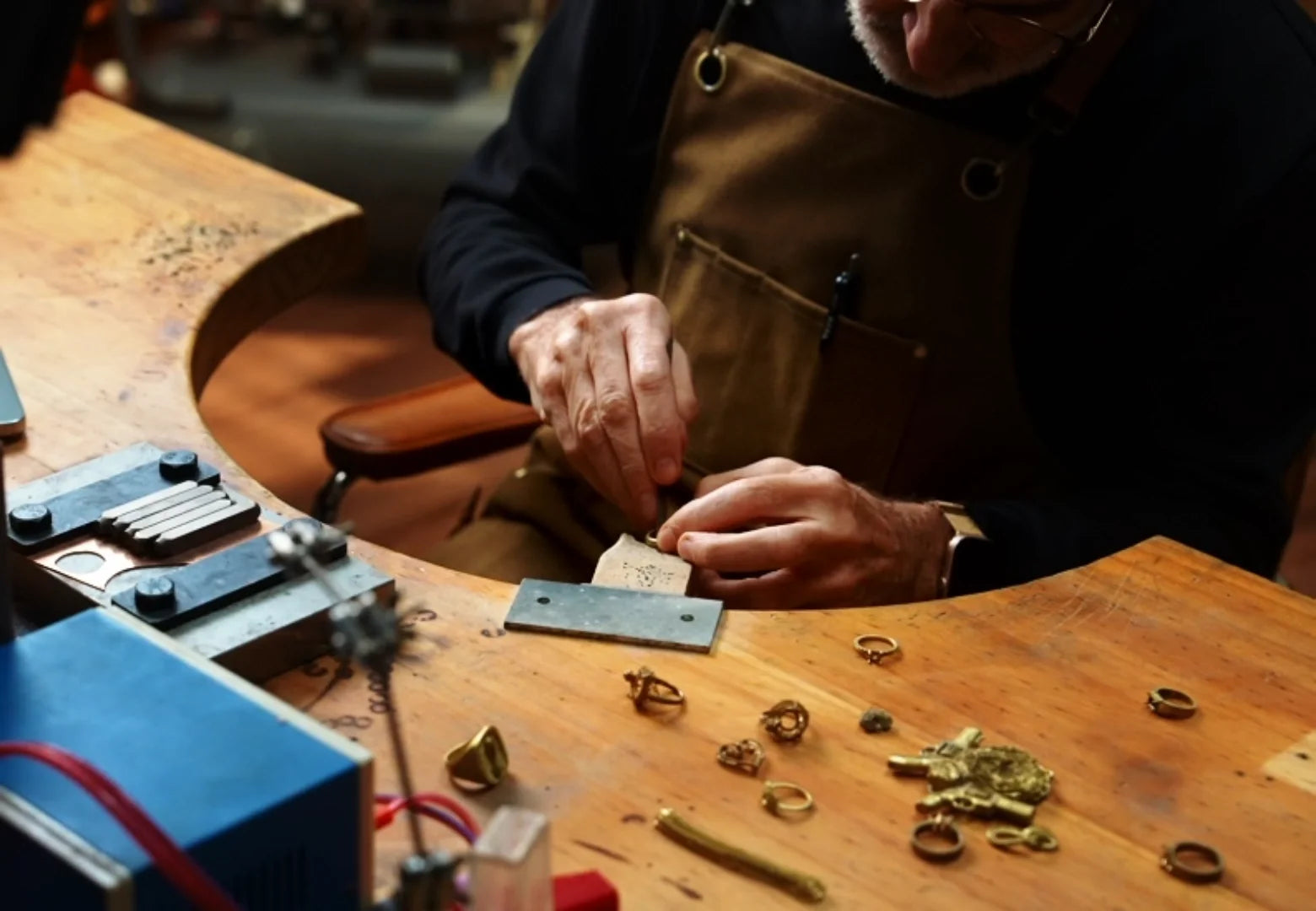
To shorten delivery times and gain greater production control, many jewelry businesses are now establishing compact in-house manufacturing spaces behind their retail stores.
This operating model is often referred to as the "Front Store + Back Workshop" approach.
The front of the business focuses on customer interaction, jewelry displays, and design consultations, while the workshop handles production.
A typical workflow includes:
- CAD jewelry design and model modification
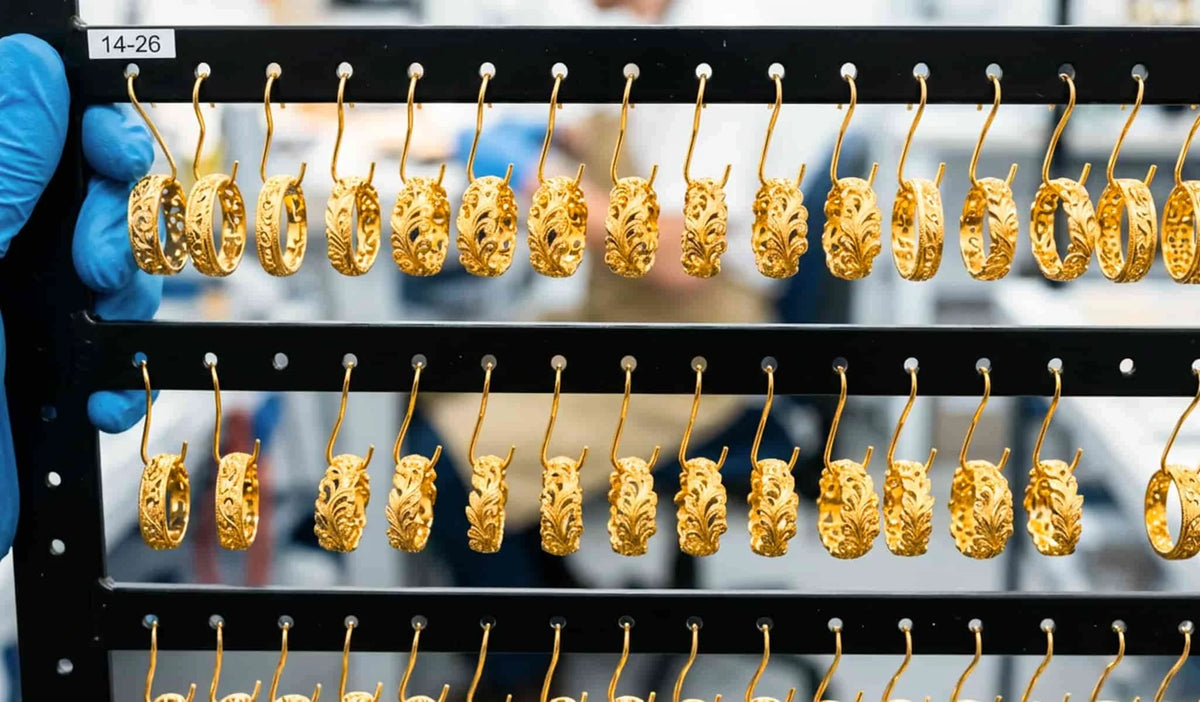
- Jewelry wax 3D printing
- Wax tree assembly
- Lost-wax casting
- Metal finishing and cleanup
- Stone setting
- Polishing, plating, and quality inspection
From a customer's perspective, it still looks like a traditional jewelry store. Behind the scenes, however, the business operates as a compact digital manufacturing workshop capable of controlling its own production schedule.
Instead of waiting for an outside supplier, the studio can begin printing wax models immediately after finalizing the CAD design. This dramatically improves production flexibility while reducing unnecessary delays.
Why Desktop Wax 3D Printers Are Ideal for Small Jewelry Workshops
When many people think about jewelry 3D printing, they imagine large industrial production systems. In reality, most custom jewelry workshops require something quite different—a compact solution that fits naturally into an existing workspace while delivering professional-quality wax models.
Desktop wax 3D printers have become increasingly popular because they address the practical needs of small and medium-sized jewelry businesses.
Limited Workspace
Jewelry stores are often located in commercial districts where floor space is both limited and expensive. Large industrial equipment typically requires dedicated production rooms, controlled environments, and additional infrastructure.
Desktop wax printers occupy significantly less space, making it possible for workshops of only a few dozen square meters to establish their own digital production capability without building a separate factory.
High-Mix, Low-Volume Production
Unlike mass manufacturing, custom jewelry production rarely involves hundreds of identical pieces.
One day may involve a custom engagement ring. The next could require an emerald pendant or a pair of unique earrings. Every project differs in gemstone size, metal weight, dimensions, and stone setting requirements.
Because production is highly customized, flexibility is often more valuable than maximum output capacity. Desktop wax 3D printers are particularly well suited for this high-mix, low-volume manufacturing environment.
Faster Customer Delivery
Delivery speed has become a major competitive advantage for jewelry businesses.
With in-house wax printing, a typical workflow may look like this:
- Morning: Finalize the jewelry design with the customer
- Afternoon: Modify the CAD model
- Evening: Print the wax model overnight
- Day Two: Complete lost-wax casting
- Day Three: Finish polishing, stone setting, and final inspection
Compared with outsourcing, many workshops can reduce overall production lead times by approximately 40%–60%. For relatively simple jewelry pieces, finished products may even be delivered within 48 hours.
Faster production not only improves customer satisfaction but also enables workshops to accept more orders, increase equipment utilization, and improve overall operational efficiency.