What Does 2900 × 2900 × 1700 DPI Mean in Wax 3D Printing?
Flashforge wax 3D printers are known for their high-precision industrial-grade performance. One of the most important specifications in these machines is resolution. For example, the WJ530 wax 3D printer lists its resolution as 2900 × 2900 × 1700 dpi, which is significantly higher than many other wax printing systems on the market.
Many users are confused when they see this parameter:
- Why are there three numbers?
- Isn’t DPI only used for paper printers?
- Does it represent X, Y, and Z directions?
- Is higher DPI always better?
- How does this relate to actual printing accuracy?
In professional wax jet 3D printing systems, the meaning of resolution is not exactly the same as in FDM or resin 3D printers. This article explains what 2900 × 2900 × 1700 dpi really means, and why it is critical for high-quality wax pattern printing.
1. 2900 × 2900 × 1700 DPI Usually Represents Resolution in X, Y, and Z Directions
In material jetting and wax jetting 3D printing technology, resolution is often expressed using three values:
X resolution × Y resolution × Z resolution
These numbers describe the smallest controllable printing density in each direction.
- X and Y resolution are determined by droplet placement accuracy from the print head
- Z resolution is determined by layer thickness
For the specification 2900 × 2900 × 1700 dpi:
- First 2900 dpi = X direction resolution
- Second 2900 dpi = Y direction resolution
- 1700 dpi = Z direction resolution
Unlike FDM printing, wax jet 3D printers do not extrude material. They deposit very small droplets of melted wax, similar to an inkjet printer. That is why the unit dpi (dots per inch) is used.
Higher dpi means more droplets per inch, which results in:
- Finer detail
- Smoother surface
- More accurate geometry
DPI to Micron Conversion
The dpi unit can be converted to microns:
1 inch = 25.4 mm = 25400 μm
For XY direction:
25400 / 2900 ≈ 8.7 μm
This means the theoretical droplet spacing is about 8–9 microns, which is a very high industrial-level precision.
For Z direction:
25400 / 1700 ≈ 15 μm
This means the minimum layer thickness is about 15 microns, which is typical for high-end wax jet printers.

2. Why XY Resolution Is Usually Higher Than Z Resolution
In wax jet 3D printing, XY and Z are controlled in different ways.
In the XY direction, resolution depends on the droplet size and placement accuracy of the print head. Very small droplets can be deposited very precisely.
In the Z direction, resolution depends on layer thickness. Layer thickness cannot be reduced infinitely because:
- Thermal control becomes more difficult
- Material stability decreases
- Printing time becomes extremely long
For this reason, most industrial wax printers are designed with higher XY resolution than Z resolution, which provides the best balance between precision, stability, and productivity.
3. How XY Resolution Directly Affects Wax Pattern Quality
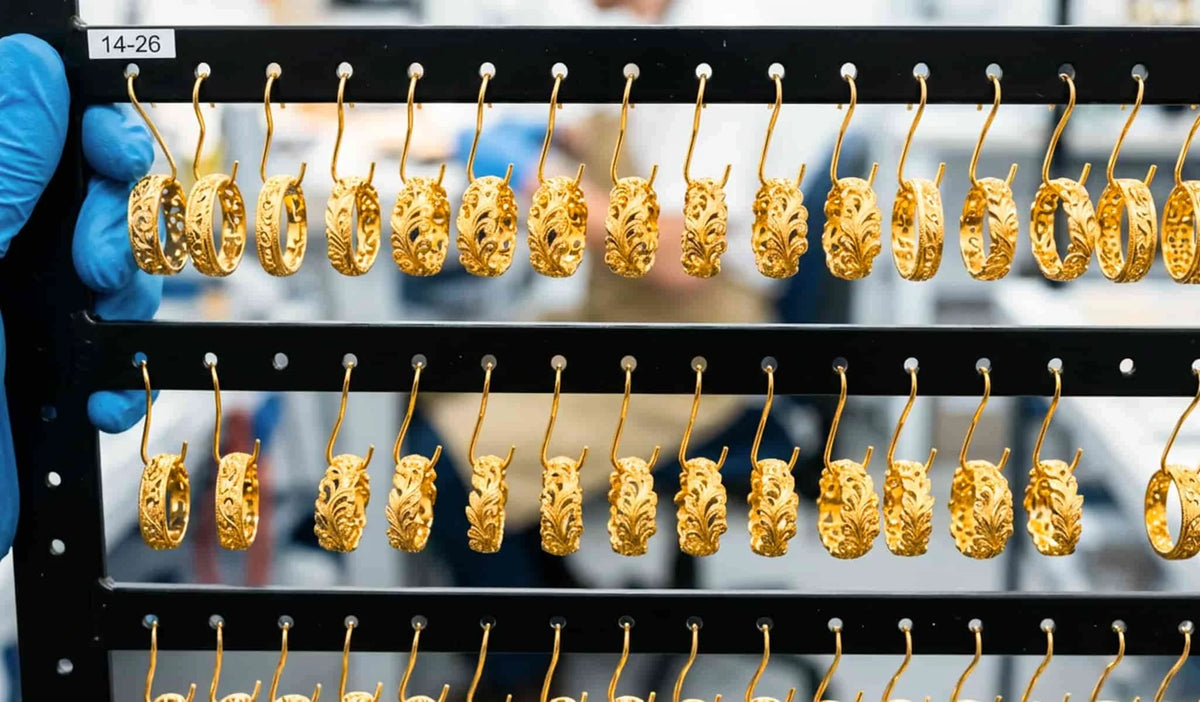
XY resolution has a direct impact on the final wax model quality, especially for jewelry, sculptures, and precision casting patterns.
Surface Smoothness
Higher XY resolution produces smoother curves and cleaner edges. Low resolution can cause visible stepping, grainy texture, or rough surfaces.
For casting applications, smoother wax patterns lead to:
- Smoother ceramic shell
- Better metal surface finish
- Less polishing after casting
Detail Reproduction
High resolution is essential for printing fine details such as:
- Engraved text
- Jewelry prongs
- Decorative patterns
- Facial expressions in statues
- Thin structures
Lower resolution may cause detail loss, deformation, or rounded edges.
Dimensional Accuracy
Higher dpi allows more precise control of holes, slots, and small features. This improves fitting accuracy after metal casting.
Support Contact Quality
Wax jet printers use very small support contact points. Higher resolution allows smaller support connections, which makes cleaning easier and reduces damage to the model surface during support removal.
Final Casting Surface Quality
Smooth wax patterns produce smoother ceramic shells, which leads to smoother metal parts after casting.
This is why high resolution is especially important for:
- Jewelry casting
- Sculpture casting
- Precision molds
- Art statues
- Industrial investment casting

4. Important Note: High DPI Does Not Always Mean High Quality
Resolution is only one factor in printing quality.
The final wax pattern quality also depends on:
- Print head stability
- Temperature control system
- Wax material viscosity
- Support material performance
- Machine calibration accuracy
- Slicing software algorithms
- Mechanical structure stability
A high dpi specification only works well when the entire system is designed for high precision.
FAQ
1. Does higher resolution always produce better wax printing results?
Not necessarily. Higher dpi means smaller droplets and finer detail, but final quality also depends on temperature control, material stability, print head calibration, and mechanical precision. If the system is not stable, high resolution alone cannot guarantee smooth printing.
2. What is the difference between DPI and layer thickness?
DPI usually describes resolution in the XY plane, which controls how precisely droplets are placed. Layer thickness describes the Z resolution, which controls how tall each printed layer is. Both affect surface quality, but XY resolution usually has a larger impact on fine details.
3. What resolution is needed for jewelry or statue wax printing?
Jewelry and sculpture casting typically require high resolution because of complex shapes and fine textures. Professional wax jet printers usually have XY resolution above 1200 dpi and layer thickness between 15–25 μm. High-end systems may exceed 2000 dpi to achieve extremely smooth surfaces and accurate detail reproduction.