Magnetic Polishing for Jewelry Manufacturing | Process, Equipment & Benefits
After jewelry has been cast, soldered, or machined, it may have reached its final shape, but its surface is rarely ready for the next production step. Oxidation, fine burrs, machining marks, investment residue, and other contaminants often remain on the metal surface. If these imperfections are not removed before final polishing or electroplating, they can reduce surface quality, affect brightness, and ultimately lower the overall product quality.
For this reason, surface finishing is an essential stage in modern jewelry manufacturing. Among the various finishing techniques, magnetic polishing (also known as magnetic finishing or magnetic pin polishing) has become one of the most widely used pre-polishing processes for gold, K gold, sterling silver, stainless steel jewelry, and precision metal components. Its ability to deliver consistent results while efficiently processing complex geometries makes it a valuable solution for both small workshops and high-volume jewelry factories.
What Is Magnetic Polishing?
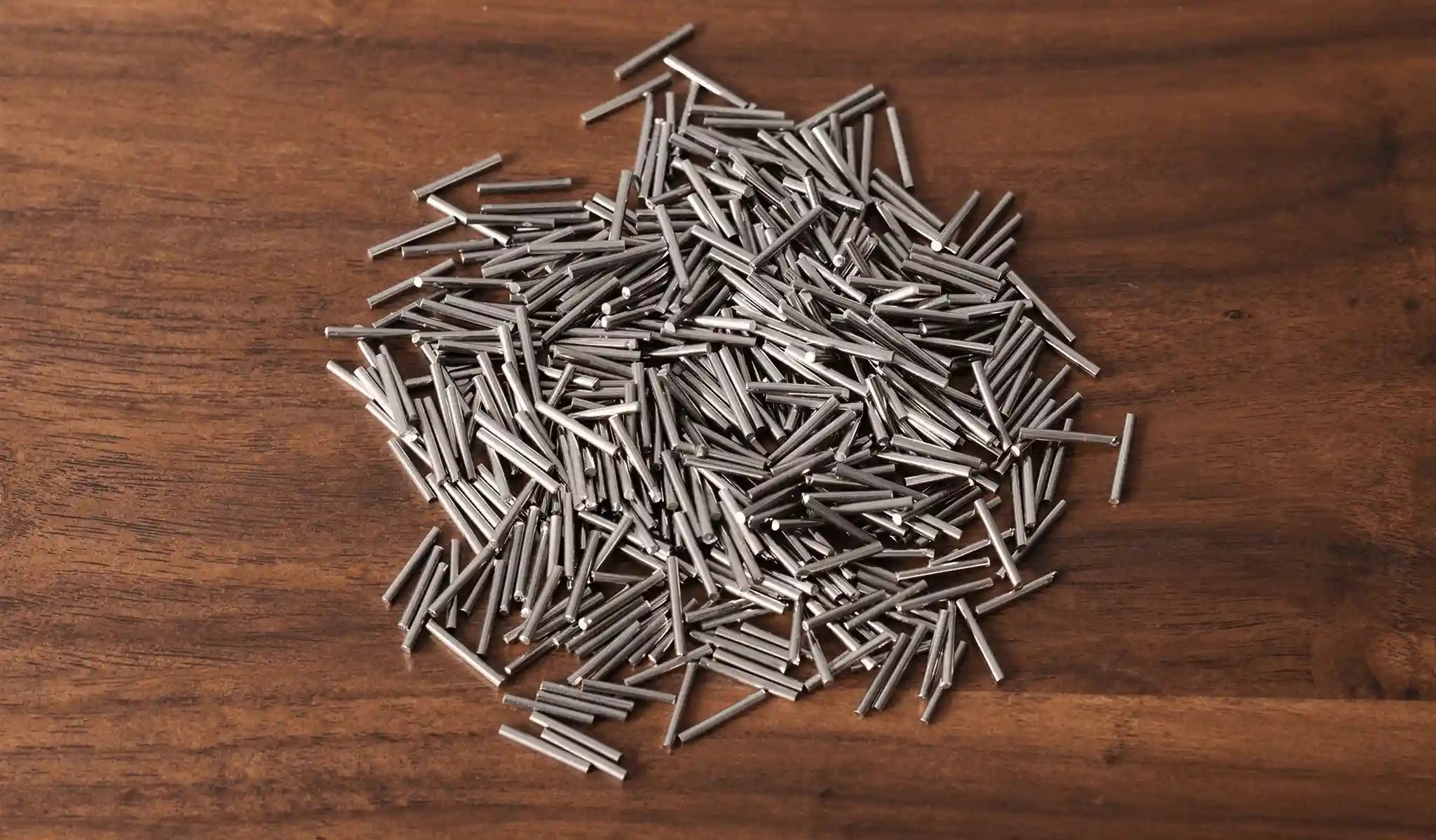
Magnetic polishing is a physical surface-finishing process that uses a rotating magnetic field to drive thousands of stainless steel pins at high speed. As the pins continuously rotate, roll, and slide against the jewelry surface, they remove oxidation, fine burrs, machining marks, and other minor surface imperfections.
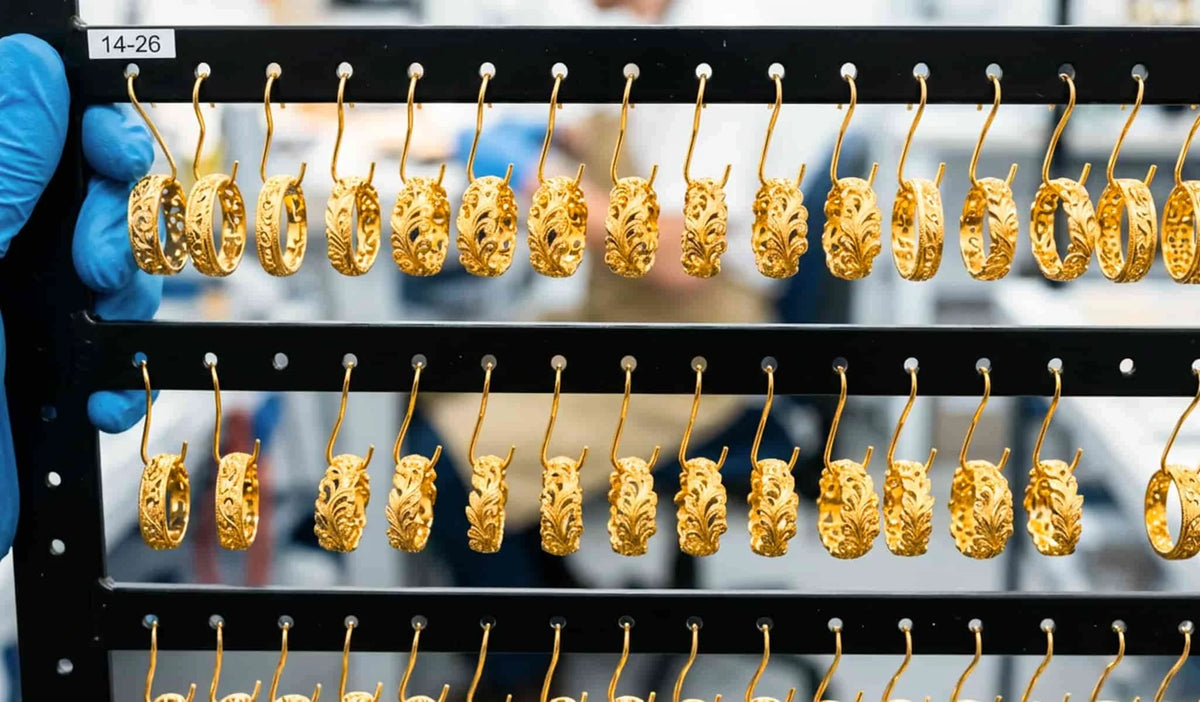
Unlike traditional mechanical polishing, which relies on fixed polishing wheels or abrasive tools, magnetic polishing uses freely moving polishing pins suspended inside the polishing chamber. Because these pins are extremely small, they can easily reach narrow gaps, internal holes, filigree structures, stone seats, chain links, and other intricate areas that are difficult to polish manually.
The process provides gentle yet effective material removal, producing a cleaner and more uniform surface without excessive abrasion. This makes magnetic polishing particularly suitable for jewelry with complex designs and delicate details.
How Does Magnetic Polishing Work?
A magnetic polishing machine operates by generating a high-speed rotating magnetic field beneath the polishing bowl.
Once the machine is switched on, the magnetic field causes the stainless steel polishing pins inside the bowl to rotate rapidly. The jewelry itself is not affected by the magnetic field and remains stationary while the moving pins continuously strike, slide, and rub against the metal surface.
At the same time, a magnetic finishing compound helps lubricate the movement of the polishing pins while suspending metal particles, oxides, and other polishing residues. This keeps the polishing environment clean and ensures stable finishing performance throughout the process.
Because the polishing pins are extremely small, they can access difficult-to-reach areas such as ring interiors, chain connections, filigree details, galleries, and recessed surfaces, resulting in a more consistent overall finish.

Main Components of a Magnetic Polishing Machine
A standard magnetic polishing machine consists of two primary sections.
1. Polishing Chamber
The upper section is the polishing chamber, which contains the polishing bowl, stainless steel magnetic pins, and magnetic finishing compound. This is where the actual polishing process takes place.
2. Drive System
The lower section contains the drive system, including the electric motor, magnetic generator, and control system. The motor continuously drives the magnetic generator to create the rotating magnetic field that powers the polishing pins.
Depending on the control system, magnetic polishing machines are generally available in either fixed-speed or variable-speed models. Variable-speed machines provide greater flexibility by allowing operators to adjust processing parameters for different jewelry materials, product sizes, and finishing requirements.
Professional machines also support forward and reverse rotation, helping minimize polishing blind spots and improving overall finishing consistency.

How to Choose the Right Magnetic Polishing Pins
The polishing pins are the primary finishing media in magnetic polishing, and their size, shape, and surface condition directly influence the polishing result.
For jewelry manufacturing, stainless steel pins measuring approximately 5–8 mm in length and 0.3–0.7 mm in diameter are commonly used. Smaller pins can easily reach intricate filigree, pavé settings, and narrow grooves, while larger pins are more suitable for removing burrs from broader surfaces.
The condition of the polishing pins is equally important. Oxidized, worn, or contaminated pins reduce polishing efficiency and may even scratch the jewelry surface. To maintain consistent finishing quality, polishing pins should be cleaned regularly, replaced when necessary, and protected from prolonged exposure to acidic or highly alkaline chemicals.
Why Is the Magnetic Finishing Compound Just as Important?
Many people assume that the polishing result depends mainly on the magnetic pins, but in reality, the magnetic finishing compound plays an equally important role in achieving a high-quality finish.
The finishing compound is typically mixed with water before use and performs several critical functions. It lubricates the movement of the polishing pins, reduces friction between the pins and the jewelry, suspends and removes metal particles, oxides, and oils generated during polishing, and helps prevent corrosion of the polishing pins. Together, these functions improve both polishing efficiency and final surface brightness.
Professional jewelry manufacturers generally recommend using neutral or mildly alkaline magnetic finishing compounds. Highly acidic or strongly alkaline solutions can corrode the polishing pins, reducing their smoothness and shortening their service life, which ultimately affects polishing consistency.
As production continues, the finishing compound gradually becomes contaminated with fine metal particles, oxides, and oils. Once its cleaning and lubricating performance declines, polishing quality may become inconsistent. Therefore, the finishing compound should be replaced regularly, and both the polishing bowl and magnetic pins should be cleaned as part of routine maintenance to ensure stable processing performance and a consistently bright surface finish.
Why Is Cleaning Before Magnetic Polishing So Important?
Poor magnetic polishing results are often caused not by the equipment itself but by inadequate pre-cleaning.
If jewelry still carries acid residues, flux, investment powder, lubricating oils, or other contaminants, these substances quickly pollute both the polishing pins and the finishing compound. As a result, the pins may become discolored, polishing efficiency decreases, and the jewelry surface may even develop additional scratches.
Different products require different cleaning procedures before magnetic polishing. Cast jewelry should be thoroughly cleaned to remove investment residues and pickling chemicals. Machined products should be degreased to eliminate lubricating oils. Gold and sterling silver jewelry that has been soldered should have all remaining flux removed and be thoroughly rinsed before entering the polishing process.
Proper cleaning not only improves polishing quality but also significantly extends the service life of both the polishing pins and the finishing compound.
How to Optimize Polishing Time and Machine Speed
Longer polishing times do not always produce better results.
The ideal polishing time depends on the jewelry material, surface condition, product complexity, and required finish. If the polishing time is too short, oxidation and burrs may not be completely removed. Excessive polishing, however, may wear away delicate details or slightly alter product dimensions.
Machine speed is equally important. Higher speeds generally improve productivity but also increase the impact force of the polishing pins. Lower speeds provide gentler finishing but require longer processing cycles.
For consistent quality, professional jewelry manufacturers typically establish standardized processing parameters—including machine speed, polishing time, and pin selection—for different product categories.
Advantages of Magnetic Polishing
- Efficiently polishes complex jewelry structures, including filigree patterns, chain links, galleries, recessed areas, and intricate details.
- Produces a highly uniform surface finish, making it ideal for batch production.
- Reduces manual polishing time by minimizing the need for touch-up finishing.
- Minimizes dimensional changes thanks to its gentle polishing action.
- Improves production efficiency while maintaining consistent surface quality.
- Compatible with modern digital jewelry manufacturing, including CAD design, wax 3D printing, and lost-wax casting workflows.
As digital jewelry manufacturing continues to evolve, magnetic polishing has become one of the most important surface-finishing processes following lost-wax casting. Today, it is widely used in the production of gold jewelry, K gold jewelry, sterling silver jewelry, stainless steel jewelry, and many precision metal components.